
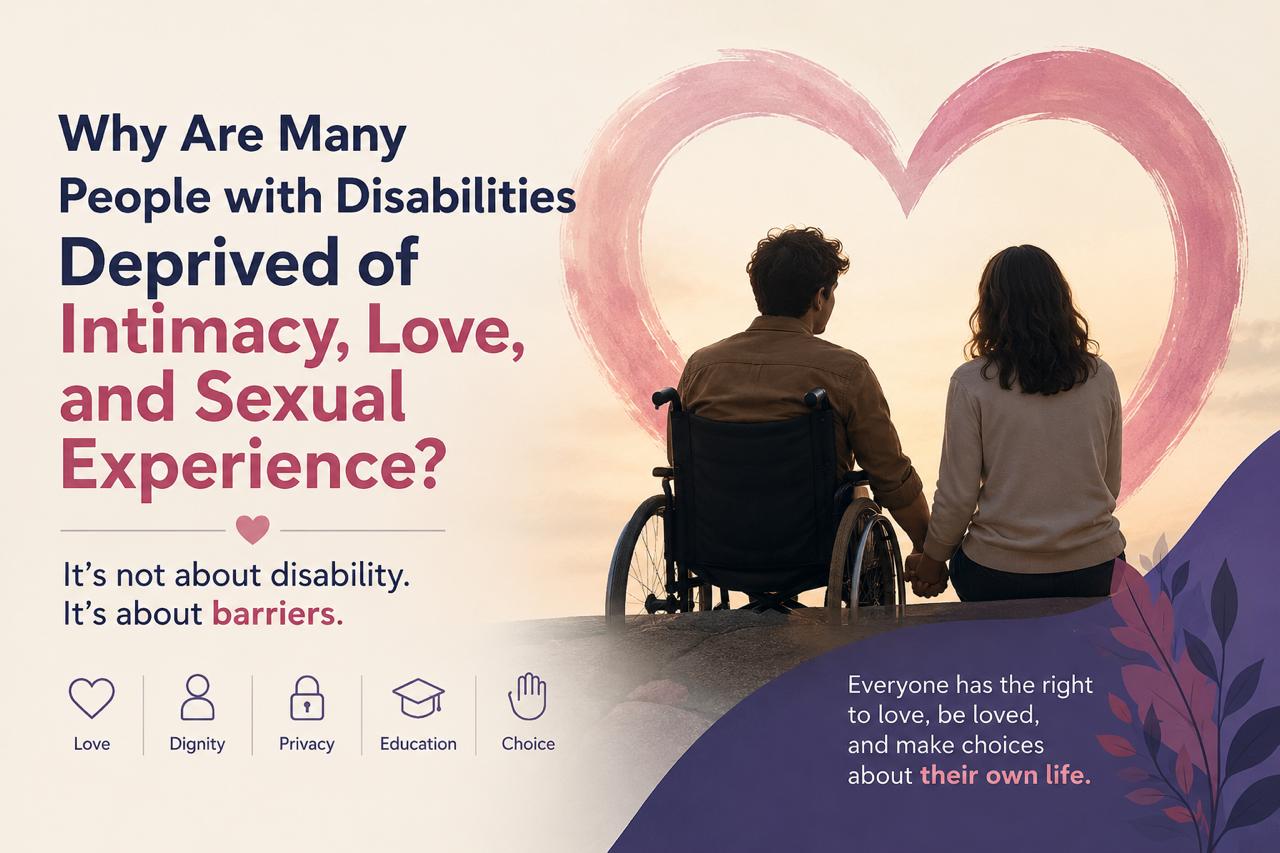
Sexual desires and emotional intimacy are inseparable parts of being human. These needs are connected to affection, identity, self-confidence, pleasure, emotional closeness, and the right to make decisions about our own bodies.
Yet for many people with disabilities, this part of life is surrounded by silence, stigma, shame, and unnecessary barriers.
Disability Is Not the Problem — Social Stigma Is
The modern understanding of disability recognizes that disability is not caused only by the body or mind itself, but is also shaped by social barriers, inaccessible environments, discrimination, and negative attitudes. The same applies to intimacy and sexuality.
Many people with disabilities are excluded from experiences of love, intimacy, and relationships not because of their disability, but because of the way society perceives them. Some people assume they do not have sexual desires, cannot fall in love, cannot have relationships, or cannot become parents. These assumptions ignore their adulthood, dignity, and human right to choose.
The Convention on the Rights of Persons with Disabilities (CRPD) emphasizes that people with disabilities have equal rights in matters such as marriage, emotional relationships, reproductive health, and informed consent.
Lack of Privacy
Privacy is one of the biggest hidden barriers. Many people with disabilities depend on family members, caregivers, or support facilities for daily living. When there is no private space, developing emotional and sexual relationships becomes extremely difficult. Independence is not only about ramps and wheelchairs; it is also about having personal space and the freedom to make adult decisions.
Overprotective Families and Support Systems
Many families deeply love their children, but sometimes that love turns into excessive protection. Fear of rejection, abuse, or social judgment is understandable, but when protection becomes control, it takes away a person’s right to experience life, grow, and make choices. Support should not become isolation, and care should not become control.
Lack of Proper Sexual Education
Many people with disabilities grow up without proper sexual education. They may be excluded from school programs, teachers may avoid discussing the subject, and healthcare professionals may focus only on medical issues. Sexual education is not only about sex; it is about consent, boundaries, safety, communication, and self-confidence. Denying this knowledge means denying people tools for safety and independence.
Inaccessible Healthcare Services
Many clinics lack accessible examination rooms. Information is often unavailable in sign language, Braille, or easy-to-read formats. Some doctors speak to caregivers instead of directly addressing the disabled person, or assume the person is not sexually active. This is not only disrespectful — it is a violation of human rights.
Dating Barriers and Economic Inequality
Social spaces and dating environments are often inaccessible. Online spaces are filled with stereotypes and fetishization. A person with a disability may be forced to answer invasive personal questions or be treated as “inspirational” instead of being seen as desirable and lovable.
At the same time, economic inequality — including lower employment rates, lower income, and higher living costs — limits access to transportation, private housing, and social opportunities, making it harder to meet people and build relationships.
Fear of Abuse Should Not Become Control
People with disabilities — especially women and young people — face a higher risk of abuse. This reality must be taken seriously, but the correct response is not taking away their freedom. The answer is education about consent and boundaries, accessible reporting systems, and respectful support. Safety and freedom must exist together.
